
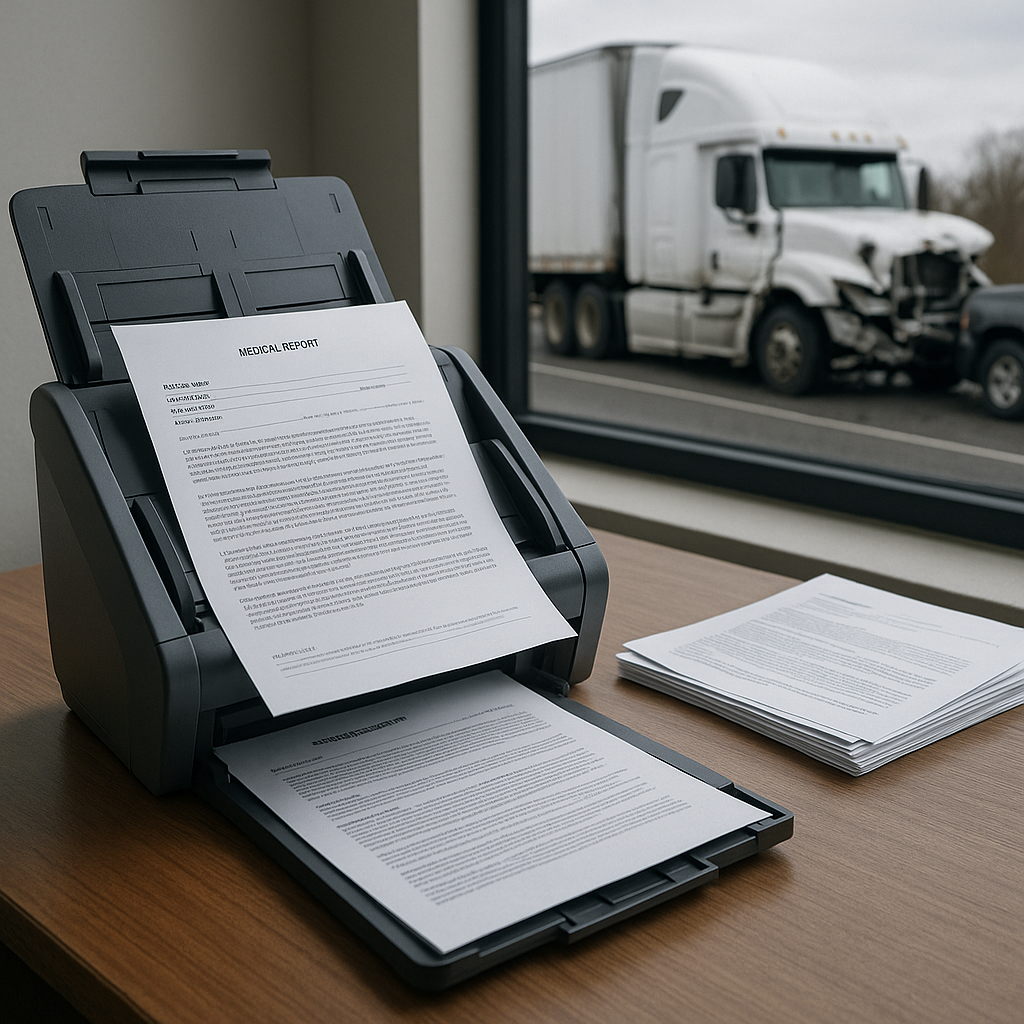
How to Scan Medical Paperwork After Truck Accidents
In the aftermath of a truck accident, dealing with medical paperwork can add to the stress and complexity of the situation. Effectively scanning and organizing these documents is crucial for ensuring a smooth recovery and potential insurance or legal claims. In this guide, we’ll explore the types of medical records involved, the importance of timing, and common challenges people face, along with practical tips for handling your medical documentation after such incidents.
Overview of Medical Documentation After Truck Accidents
Truck accidents can lead to severe injuries, requiring extensive medical care. As such, managing the resulting medical documentation is vital. These records provide a detailed overview of your injuries and treatments, supporting recovery management and potential interactions with insurance companies or legal entities.
Common Medical Record Types
Understanding the types of medical records you may encounter is essential:
1. Emergency Room Reports: These documents summarize the initial diagnosis and treatment. They detail the extent of injuries and any immediate actions taken by medical staff, such as surgeries or other interventions.
2. Hospital Discharge Papers: After being admitted, the discharge papers offer a synopsis of your hospital stay, including medical advice and prescribed medications for recovery.
3. Specialist Consultations: In severe cases, specialists might be involved. Their reports provide expert insights into specific injuries or conditions, offering a deeper understanding of more complex health issues.
4. Physical Therapy Records: If rehabilitation is necessary, these records track your progress and detail the treatments prescribed to aid recovery.
5. Prescription Records: Keeping track of medications prescribed is crucial for a coherent healthcare plan. These documents ensure you follow dosage and medication guidelines accurately.
Why Timelines and Consistency Matter
Timeliness and consistency in maintaining your medical records are critical.
– Accurate Chronology: An accurate timeline of your medical treatment is vital when recounting the sequence of events. Consistency in record-keeping helps in verifying the continuity of care and treatment efficacy.
– Insurance and Legal Processes: Insurers and legal parties may require a comprehensive history and clear documentation to process your claims effectively. Disorganized or incomplete records can delay or even jeopardize these processes.
Having a systematic approach to scan and organize these documents helps streamline recovery and any related processes.
Common Documentation Problems People Face
Dealing with medical paperwork can present numerous challenges. Some of the most common issues include:
– Volume of Documentation: After a major incident like a truck accident, the amount of paperwork can be overwhelming. Sorting through numerous medical records, each with varying degrees of importance, can be challenging.
– Misplacement: Important documents, if not organized correctly, can easily get misplaced. This can lead to significant delays or issues when trying to access crucial medical histories.
– Complicated Terminology: Medical records often contain complex terminology that can be difficult to understand. Misinterpretation can lead to confusion in documenting your medical history accurately.
– Inconsistency Across Providers: If multiple healthcare providers are involved, inconsistencies in record-keeping can occur. This makes it difficult to maintain a cohesive understanding of your medical journey.
To combat these challenges, digital solutions like scanning can be effective, allowing for more efficient storage and retrieval of documents.
How to Scan Medical Paperwork from a Truck Accident
The process of scanning medical paperwork involves converting physical documents into digital files. Here’s a step-by-step guide to effectively scan and organize your medical records following a truck accident:
1. Gather All Documents: Start by collecting all your relevant paperwork. This includes reports from emergency rooms, specialists, therapists, and any prescription details.
2. Organize by Category: Categorize the documents before scanning. For example, group all hospital-related documents together, and do the same for prescription records and therapy notes.
3. Utilize a Quality Scanner: Invest in a good-quality scanner to ensure clear and legible digital copies. Most modern scanners have features that can scan multiple pages into a single file.
4. Use Scanning Software: Software applications can enhance the scanning process by allowing for easy organization and search capabilities. Look for features like Optical Character Recognition (OCR) which converts scanned text into searchable data.
5. Ensure Backup: Store your scanned documents in multiple locations, such as cloud storage and external drives, to mitigate the risk of loss.
6. Organize Digitally: Use folders and subfolders to arrange your digital files clearly. For instance, create a main folder named “Truck Accident Medical Records” with subfolders for each type of document.
7. Maintain a Consistent Filing System: Use a consistent naming convention for files, incorporating elements like the date, healthcare provider’s name, and type of document. This makes retrieval easier.
By following these steps, you can ensure your medical paperwork is both easily accessible and securely stored.
Common Documentation Problems People Face
Efficient scanning and organization of medical paperwork play a pivotal role in managing post-accident recovery and any related insurance or legal processes. Although the experience can be daunting, employing systematic approaches to document management will simplify your journey. Remember, timeliness, consistency, and precision are keys to ensuring all aspects of your medical paperwork support your recovery process effectively.
—
In conclusion, while dealing with medical paperwork after a truck accident may seem overwhelming, the right strategies can simplify the process significantly. By understanding the types of documents, the importance of timelines, and potential challenges, you can efficiently manage your records. This not only aids in a smooth recovery but also ensures preparedness for any insurance or legal necessities that may arise.